Basic Information
| Field | Details |
|---|---|
| Full name (as given) | Willow Dean Kearse |
| Known relationships | Mother of actor Brian Tyree Henry |
| Occupation (publicly reported) | Educator — classroom teacher (reported as a sixth-grade teacher) |
| Family size | Youngest of five children (one son, four older sisters) |
| Notable dates | Died May 2016 (publicly reported) |
| Public recognition | Remembered in interviews with her son and publicly honored in the Atlanta episode “Woods” |
| Net worth | No reliable public estimate found |
Life, Family, and the Small Details That Tell a Big Story
I like to think of Willow Dean Kearse the way a set designer thinks of a room: not as one flashy thing, but as a collection of lived-in corners — a bulletin board with hand-cut letters, a stack of children’s drawings held together with a paperclip, the hum of fluorescent lights. That quiet domesticity is exactly what the record shows. She wasn’t a headline-maker, but she shaped a life that later ripple-cast across stages and screens.
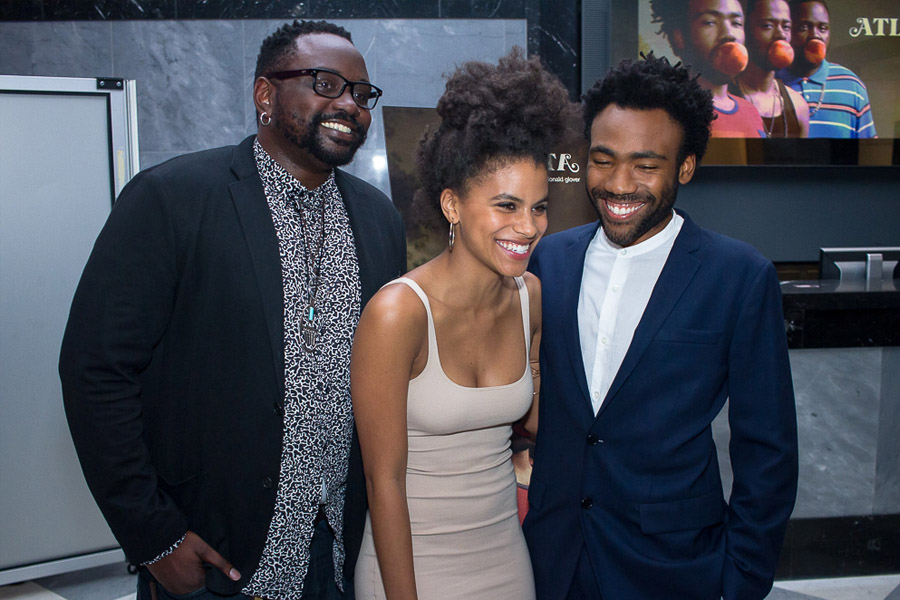
Willow is primarily known in the public sphere as the mother of Brian Tyree Henry, the actor who rose from Atlanta’s theater circles to national attention as Paper Boi on Atlanta and then as a film presence. Brian has spoken of her in ways that read like lines from a tender script: teacher, confidante, the person he called his “best friend.” Those two words — best friend — move through articles and interviews like a leitmotif; they’re short but heavy with soundtrack.
Family numbers matter here. Willow was the youngest of five children and the only boy in the household was her son — a detail Brian has shared in interviews, painting a portrait of a bustling, multigenerational household where the youngest learned to listen, to observe, to carry stories. She and her husband — referenced in public materials as Marion Henry Jr. — raised a family that reads like a small ensemble cast: four older sisters, a son who would become a public figure, and the private threads that tie them together.
The arc of Willow’s public story narrows to a hard punctuation mark in May 2016, when she died in a car accident. That date became a hinge in Brian’s own life and work; creatives often fold grief into art, and that’s exactly what happened here. The Atlanta episode “Woods” carries a dedication in her memory, and interviews with Brian trace how that loss shifted his sense of humor, his priorities, and the pace at which he accepted the world’s attention.
There’s a particular kind of domestic heroism in being a teacher — in being the person who staples name tags on, who stays late to re-arrange desks into a circle. Public records and interviews emphasize that Willow was an educator; Brian has described spending summer days helping decorate her classroom. It’s an image so specific it almost smells like paste and construction paper. In the simplest of ways, her day-to-day work was to make a space where other people could find their voices — and that is, if you ask me, an origin story worth dwelling on.
If you’re cataloguing facts: she’s named in obituaries and public memorial listings under variants of her name (including Willow Kearse-Rice and other spellings), which is why the trail through public records sometimes reads like a choose-your-own-adventure. But the throughline is consistent: teacher, mother, center of a family orbit, gone too soon in 2016 — and remembered.
Numbers and small timelines help strip sentiment down to a readable spine: five children in the household, May 2016 as the turning point; the Atlanta dedication that follows in the cultural record; interviews afterward where Brian describes both grief and the strange way fame felt in the shadow of personal loss. The details are simple, the emotional math is complex: one personal tragedy + one public career = a new lens through which audiences meet an actor’s work.
And the rest of the family? We meet them in parenthetical mentions and quiet refrains. Marion Henry Jr., known publicly as Brian’s father, served in the military — a fact that explains certain family rhythms: discipline, travel, perhaps a household shaped by orders and routines. Brian’s four older sisters are referenced in interviews as part of the family configuration, though their personal profiles remain out of the limelight. That discretion — some members deliberately private, others steadily in the public eye — creates a contrast that feels almost cinematic: foreground and background, close-up and wide shot.
I love imagining the ordinary scenes that stitched their days together: a kitchen table under a lamp where homework and dinner collide, a mother taping up a classroom display, a son who later learns to transmute grief into roles and interviews. There’s an economy to those images — small gestures that imply much more. Pop culture will often demand the big reveal, the scandal, the headline, but in this family there’s an indie sensibility: craftsmanship, restraint, an emotional honesty that doesn’t need to scream to be heard.
It’s tempting to ask about net worth — to translate life into ledger entries — but there is no public or reliable figure for Willow. She remains, in most public materials, a private person whose worth is recorded in other currencies: the recollections of her son, the dedications on screen, the classrooms she tended.
Finally, if you listen for tone more than facts, Willow’s story is the kind of small-scale American narrative that occupies the borderland between lived domesticity and the sudden glare of celebrity. It’s the teacher who becomes a muse; the mother whose absence becomes a motif in a son’s work; the private life that, through loss, becomes part of the public story. That’s cinematic without being cinematic in the ostentatious way — think quiet close-ups, a single elegiac piano note as the credits roll, a voiceover that lingers on the ordinary like it’s the most important thing in the world.
Content Snapshot: Quick Table of Key Dates & Counts
| Item | Date / Number |
|---|---|
| Number of children in Willow’s household | 5 (Willow’s son + 4 older sisters) |
| Date of death | May 2016 |
| Profession indicated in public accounts | Classroom teacher (reported as sixth-grade) |
| Public dedication | Atlanta episode “Woods” dedicated in her memory |
| Public net worth data | None found |
FAQ
Who was Willow Dean Kearse?
Willow Dean Kearse was an educator and the mother of actor Brian Tyree Henry, remembered publicly both for her work in the classroom and for the role she played in her son’s life.
What was her occupation?
Public accounts describe her as a classroom teacher — specifically cited as a sixth-grade teacher in interviews with her son.
When did she die?
She died in May 2016, an event that has been referenced repeatedly in interviews and public dedications.
Who are the immediate family members?
Her immediate family, as reported publicly, includes her son Brian Tyree Henry, her husband Marion Henry Jr., and four older daughters (Brian being the youngest and only son).
Did she have a public net worth?
No reliable public estimate of Willow Dean Kearse’s net worth is available.
How has she been publicly remembered?
She’s been remembered in interviews with her son, through a dedication on an Atlanta episode, and in obituary and memorial listings under variations of her name.
Giving Your Fleet Trucks A Second Chance With Refurbished Ecms
The Dig Day Playbook For Keeping Buried Utilities Out Of Trouble
How High Performing Airports Keep The Chaos Moving